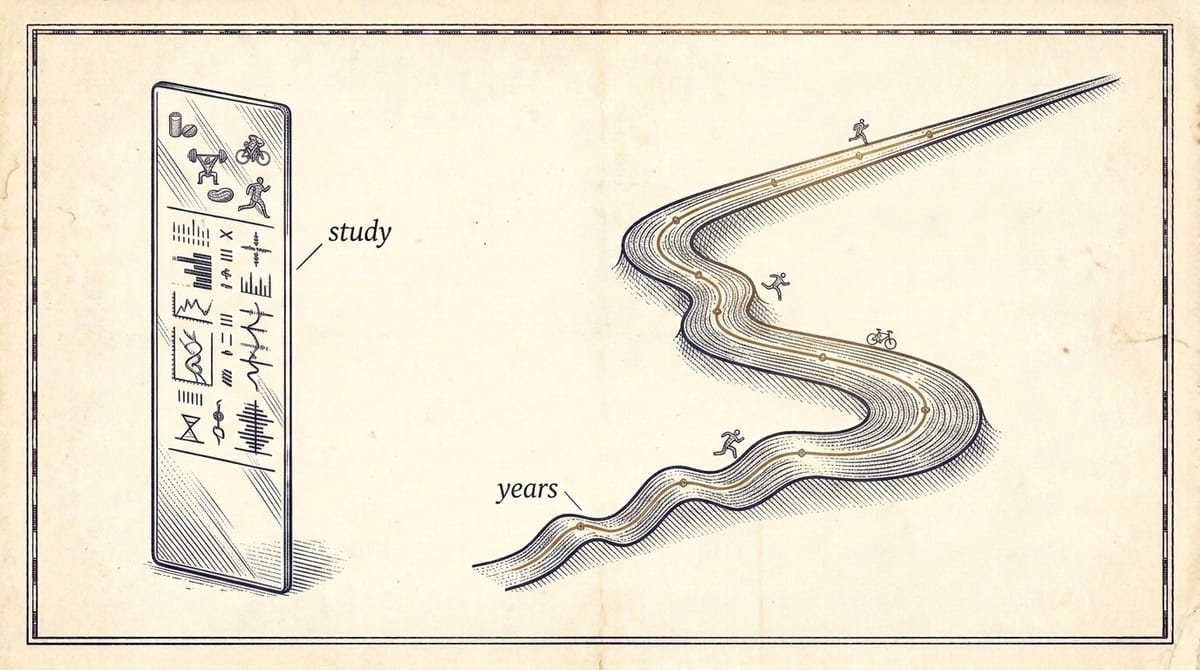
We’re used to asking one question in this era: “Is there science behind training this way?”
It’s a good habit. Sport science means we no longer have to rely on remedies passed down master to apprentice—we can use data to test which methods actually work. I spend a lot of time reading research myself, precisely because I trust evidence over intuition.
But the more I read, the clearer one thing becomes: the questions science can answer and the questions a coach has to answer every day are often not the same question.
This isn’t a failure of science. It’s its natural boundary. Seeing where that boundary lies lets us look at training more honestly.
A Study Measures a World Sliced Thin
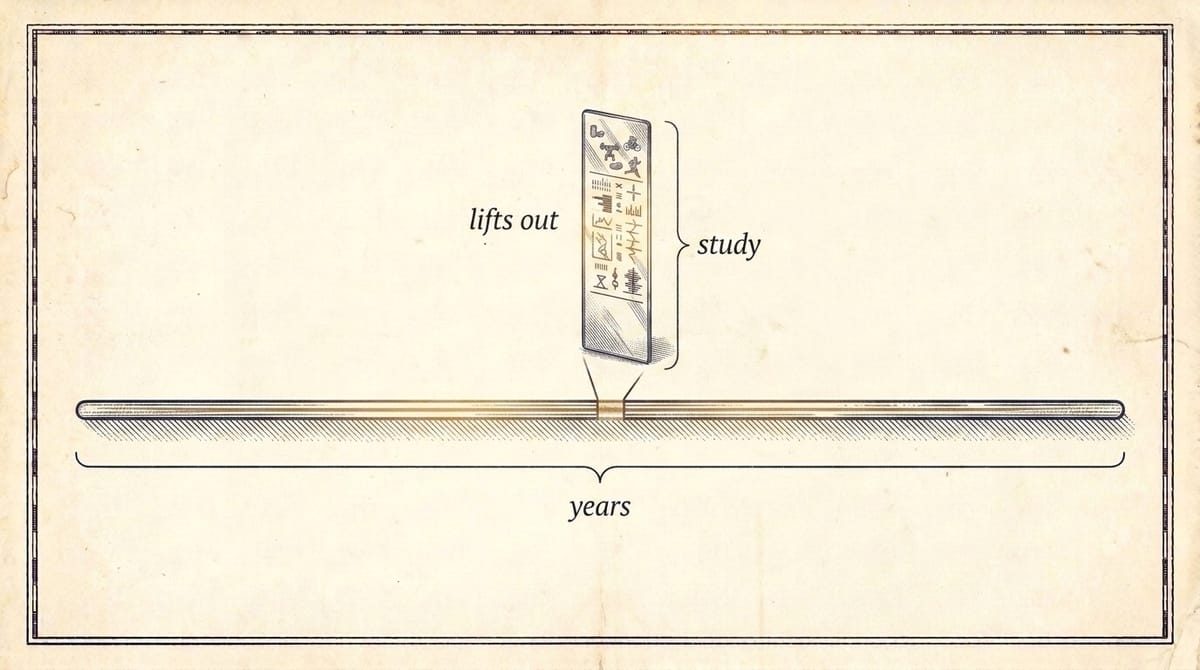
To get a clean, repeatable answer, a training study has to slice the world thin. Hold one variable, control the rest, observe the result over a not-very-long stretch of time. That’s the price of rigor, and also its limit.
Runners need to understand three of those limits.
The first is time. Most training interventions last only weeks to a few months, but some adaptations simply don’t happen on that timescale. Take running economy: meaningful gains often surface only after more than twenty-four training sessions, and many studies end before that. The long-term effects of speed-endurance training are nearly a blank in the literature. Research can measure “what happened in eight weeks.” It can’t measure “what your body becomes over two years.”
The second is the participants. A huge share of studies recruit untrained or recreationally active people—they’re easy to recruit, have room to improve, and show clear effects. The problem is that how someone who has never trained improves and how an athlete who has trained for ten years improves further are two different things. Staff and colleagues put it bluntly in their 2023 review: studies describing the “long-term development” of elite athletes are pitifully few, and data on those under eighteen barely exist.
The third is sample skew. Many studies recruit only one sex, only a single training group; in that same review, women made up only about a quarter of the participants in long-term development research.
So “research proves it works” carries a hidden string of conditions behind it: that population, that intensity, that duration, that controlled environment. Strip those premises away and the conclusion doesn’t automatically extend into real training.
Building an Athlete Is Measured in Years
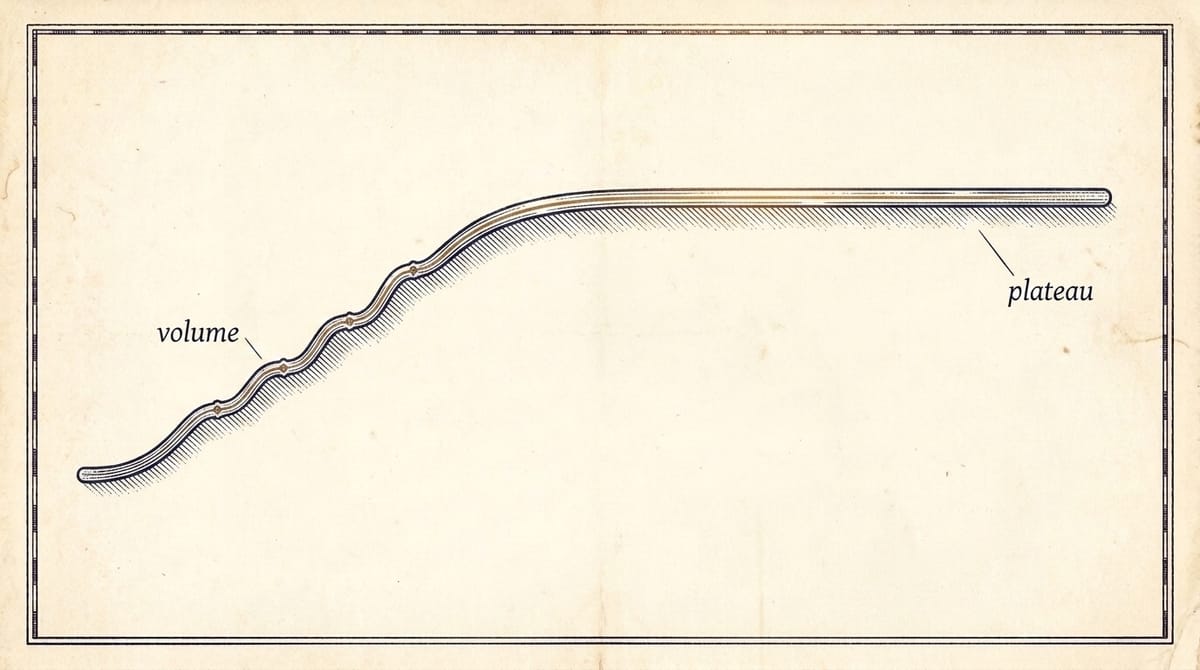
Science measures a slice. Building an endurance athlete is a long river.
That Staff review compiled the longitudinal studies: elite endurance performance accumulates across adolescence into adulthood, routinely over a decade. Training volume isn’t added in a straight line—it rises and dips year to year, finally reaching a plateau somewhere between ages twenty-six and thirty. No several-week study can hold that scale.
The more concrete evidence comes from a case study. Solli and colleagues tracked a world-class female biathlete with Olympic and World Championship medals across seventeen full seasons, from age seventeen to thirty-three. Her training volume climbed all the way to a peak, and between ages twenty-two and twenty-seven her VO2max rose by ten percent.
The most interesting part is what came later: in her peak years after thirty, she actually trained with more low-and-moderate intensity and less high intensity. The training philosophy that carried her to the top of the world was no longer the one that brought her up as a junior. What’s right shifts with the person, and with the stage.
A one-off study can never see that turn. It can only take a snapshot, and development is a whole film.
The Better the Athlete, the More Science Around Them
You might think I’m about to say elite training runs on experience, not science. The opposite is true.
The better the athlete, the higher the concentration of sport science around them. National-team-level athletes typically have a full sport-science team—physiological testing, training-load monitoring, nutrition, biomechanics, the whole array—with far more data than any amateur runner could ever access. At the elite level, the problem was never a shortage of science.
But the more data there is, the more one thing stands out: integrating that pile of measurements into the decision of “this athlete, this week, exactly how to train” is still the coach’s job. The sport-science team supplies the map; the one choosing a path across the terrain is the coach.
Sandbakk and colleagues interviewed twelve world-class Norwegian coaches in 2025, whose athletes had collectively won around 380 international medals. They found these coaches “systematically collect training data from their athletes and exhibit an experimental mindset when making individual training adjustments”—and that this entire body of expertise “has been almost untouched in the scientific literature.” Science gave them tools; how to use the tools is another discipline entirely.
The Gap Lives in the Act of Integration
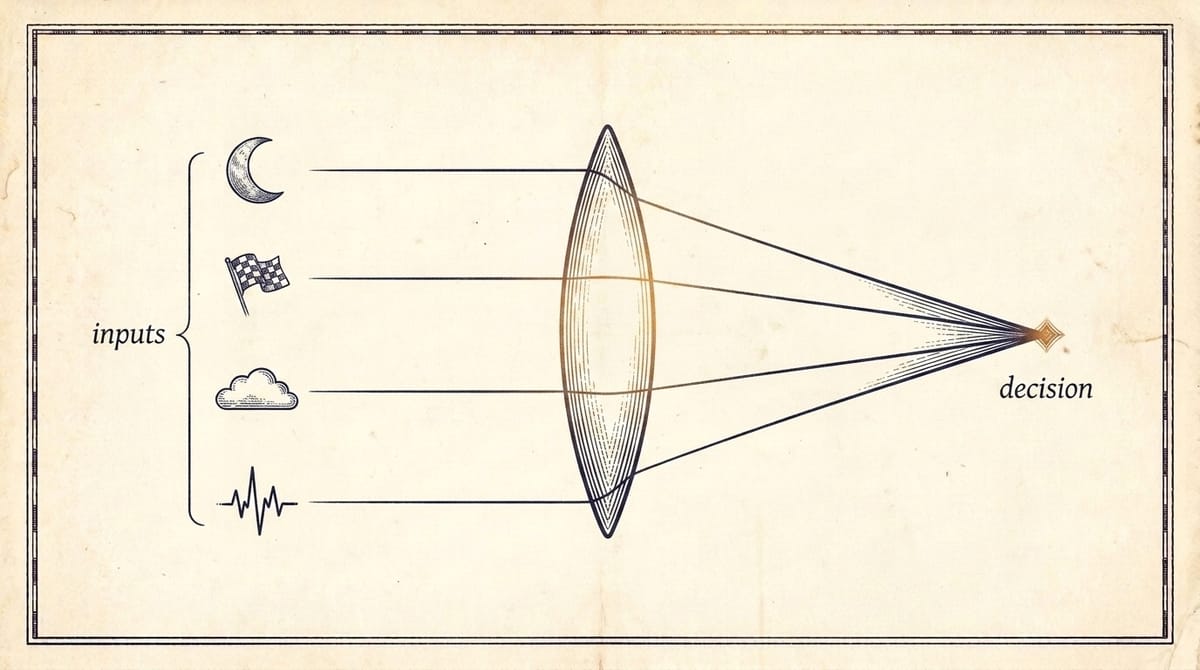
The gap between science and the field isn’t in any single piece of knowledge. It’s in integration.
The questions a coach faces every day look like this: this athlete slept badly last night, there’s a race this week, the rain means moving indoors, and the response to the last session was slower than expected—putting it all together, do we add load today, or pull back and rest? No paper was ever written for “this person at this exact moment.”
Fullagar and colleagues, examining the barriers to translating research into the field, point out that research questions often simply don’t apply to the field setting, and that coaches acquire knowledge differently from researchers. Kirkland and Cowley surveyed over eight hundred endurance coaches and found their most relied-upon source of learning was “learning through experience”—rated far above formal coach education.
It’s not that coaches can’t be bothered to read papers. It’s that the problem they have to solve has no answer in the papers. Integrated judgment can’t be proven by population statistics—the more you emphasize individualization, the harder it is to validate with “on average” research. This isn’t a loophole in science. It’s the part of training that is inherently an art.
Even the skeleton of training still stands on this ground. That Sandbakk study states it plainly: neither traditional periodization nor block periodization has been scientifically verified. Practice has always run ahead of research; what coaches do every day is the thing science hasn’t yet managed to describe.
So, Training Is a Craft
If science can’t give the field every answer, what does a coach decide on?
On a training philosophy they’ve built themselves.
Over a career—the people they’ve coached, their own years as an athlete, the observations stacked up over time, the mistakes made, the bets that paid off—a coach gradually grows a framework of their own. It decides how they view intensity, how they weigh risk against recovery, which side they trust when the data conflicts. That framework is a little like faith: it isn’t adopted because it’s been fully proven, but because it helps a person make a decision under uncertainty.
To call it an art is not to say you can just wing it. Quite the opposite. The judgment it demands is harder than following a script. Art means having to choose where the evidence runs out, and owning that choice.
That’s also why there’s no right or wrong between different coaches’ philosophies. Some prefer the patient accumulation of high volume at low intensity; some are masters of wringing out form with short bursts of high intensity. Some rely on data, some on an eye for reading people. The standard for judging a training philosophy was never “how scientific is it,” but a plainer question:
For this athlete, at this time, under these constraints—did it make them stronger?
There’s no best training method, only one that fits or doesn’t. That’s the starting point of this blog, and the shared premise behind every training article that follows.
Science is the map. The one running is a person,
and the path is something a coach walks out alongside them.
References
- 1. Staff, H. C., Solli, G. S., Osborne, J. O., & Sandbakk, Ø. (2023). Long-Term Development of Training Characteristics and Performance-Determining Factors in Elite/International and World-Class Endurance Athletes: A Scoping Review. Sports Medicine, 53(8), 1595–1607. ↗
- 2. Solli, G. S., Flom, A. H., & Talsnes, R. K. (2023). Long-term development of performance, physiological, and training characteristics in a world-class female biathlete. Frontiers in Sports and Active Living, 5, 1197793. ↗
- 3. Sandbakk, Ø., Tønnessen, E., Bucher Sandbakk, S., Losnegard, T., Seiler, S., & Haugen, T. (2025). Best-Practice Training Characteristics Within Olympic Endurance Sports as Described by Norwegian World-Class Coaches. Sports Medicine - Open, 11. ↗
- 4. Kirkland, A., & Cowley, J. (2023). An exploration of context and learning in endurance sports coaching. Frontiers in Sports and Active Living, 5, 1147475. ↗
- 5. Fullagar, H. H. K., McCall, A., Impellizzeri, F. M., Favero, T., & Coutts, A. J. (2019). The Translation of Sport Science Research to the Field: A Current Opinion and Overview on the Perceptions of Practitioners, Researchers and Coaches. Sports Medicine, 49(12), 1817–1824. ↗
If this article was helpful, feel free to buy me a coffee ☕ and keep me writing.